Understanding what is in a drink is an important part of making informed and responsible choices. Beverage labels provide useful information about alcohol content, serving sizes, ingredients, and other details that can help consumers understand what they are drinking. However, labels can sometimes be confusing, particularly when alcohol content is expressed as a percentage rather than as a standard serving.
Learning how to interpret these details makes it easier to compare beverages, estimate alcohol intake, and recognize how different drinks can affect you. Understanding product information and making informed choices is equally important when exploring online services, including platforms associated with the tamasha casino app in India.
Start With Alcohol by Volume (ABV)
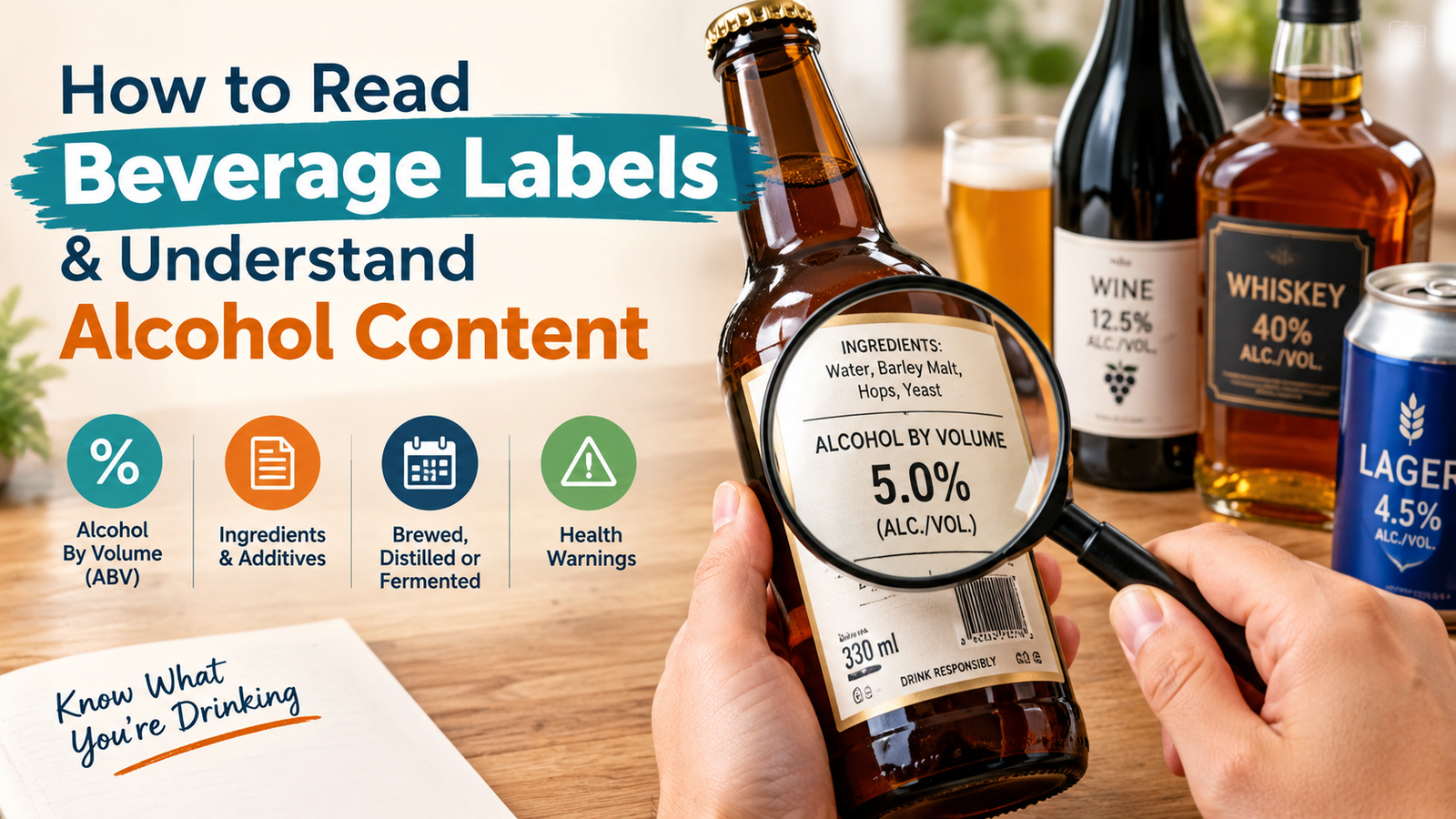
The most important figure on an alcoholic beverage label is usually Alcohol by Volume (ABV). This percentage tells you how much of the liquid is pure alcohol by volume.
For example, a drink labeled 5% ABV contains approximately 5% pure alcohol by volume. A wine labeled 12% ABV contains considerably more alcohol by volume than a 5% beer, even though the actual amount consumed depends on how much you drink.
Typical ranges include:
- Light beers and some ciders: around 2–5% ABV
- Regular beers: around 4–7% ABV
- Many wines: around 10–15% ABV
- Fortified wines: often around 15–20% ABV
- Spirits: commonly around 35–50% ABV
These are general ranges rather than fixed rules. Always check the actual label because products within the same category can have substantially different alcohol concentrations.
Importantly, ABV is not the same thing as the amount of alcohol in your glass. A larger serving of a lower-ABV beverage can contain as much or more alcohol than a smaller serving of a stronger beverage.
Pay Attention to Serving Size
One of the easiest ways to misunderstand alcohol labels is to focus only on ABV.
Consider two drinks: a 330 ml beer at 5% ABV and a 500 ml beer at 5% ABV. They have the same alcohol concentration, but the larger serving contains more total alcohol.
The same principle applies to wine and spirits. A generous home-poured glass of wine may be significantly larger than the serving size used for nutritional or alcohol calculations. Similarly, cocktails can contain multiple measures of spirits even when they appear to be a single drink.
Some labels may provide information per serving, per container, or both. Check carefully to determine whether the stated figures apply to the entire package or only part of it.
A useful calculation for estimating the volume of pure alcohol is:
Pure alcohol (ml) = beverage volume (ml) × ABV ÷ 100
For example, 500 ml of a 5% ABV beverage contains approximately 25 ml of pure alcohol.
This calculation is useful for comparing drinks, but it should not be interpreted as a precise measure of how much alcohol will affect an individual. Body size, sex, food consumption, medications, drinking speed, tolerance, and other factors can influence alcohol’s effects.
Understand Labels beyond the ABV Number
Alcohol percentage is only one piece of information. Depending on the country and product, labels may also include ingredients, allergens, calories, carbohydrates, sugar, production information, and warnings.
- Ingredients: These can help people identify components they need or want to avoid, including allergens.
- Calories and sugar: Alcoholic drinks can contain significant calories, particularly sweet wines, liqueurs, cocktails, and some flavored beverages. However, calorie information does not indicate how intoxicating a drink will be.
- Container size: A bottle or can may contain multiple servings. Never assume that one package equals one standard drink.
- Warnings: Some products carry warnings about pregnancy, driving, age restrictions, or other health considerations. These should be taken seriously.
It is also useful to distinguish marketing language from factual information. Terms such as “premium,” “smooth,” “natural,” or “light” do not necessarily tell you how much alcohol the beverage contains. The ABV and serving information are much more relevant when assessing alcohol intake.
What Is a Standard Drink?
A standard drink is a measurement designed to represent a specific amount of pure alcohol. However, the definition varies between countries.
This is why simply counting bottles, glasses, or cans can be misleading. A standard drink in one country may represent a different quantity of pure alcohol than a standard drink elsewhere.
When comparing alcohol consumption, use the standard-drink definition recommended by your local health authority rather than assuming that every beverage or serving represents one standard drink.
It is also important to remember that cocktails and mixed drinks can be particularly difficult to assess. A single cocktail may contain one, two, or more standard servings of alcohol, depending on the recipe and how much spirit is used.
Conclusion
Beverage labels are more than packaging; they are a useful source of information for understanding what you are consuming. Learning to identify ABV, serving size, container volume, and standard-drink information can help you compare beverages and make more informed choices.
The key lesson is simple: don’t judge alcohol content by percentage alone. Consider both concentration and quantity, and remember that labels cannot predict an individual’s level of impairment. Used alongside responsible drinking practices, label information can help consumers make safer, more informed decisions.