
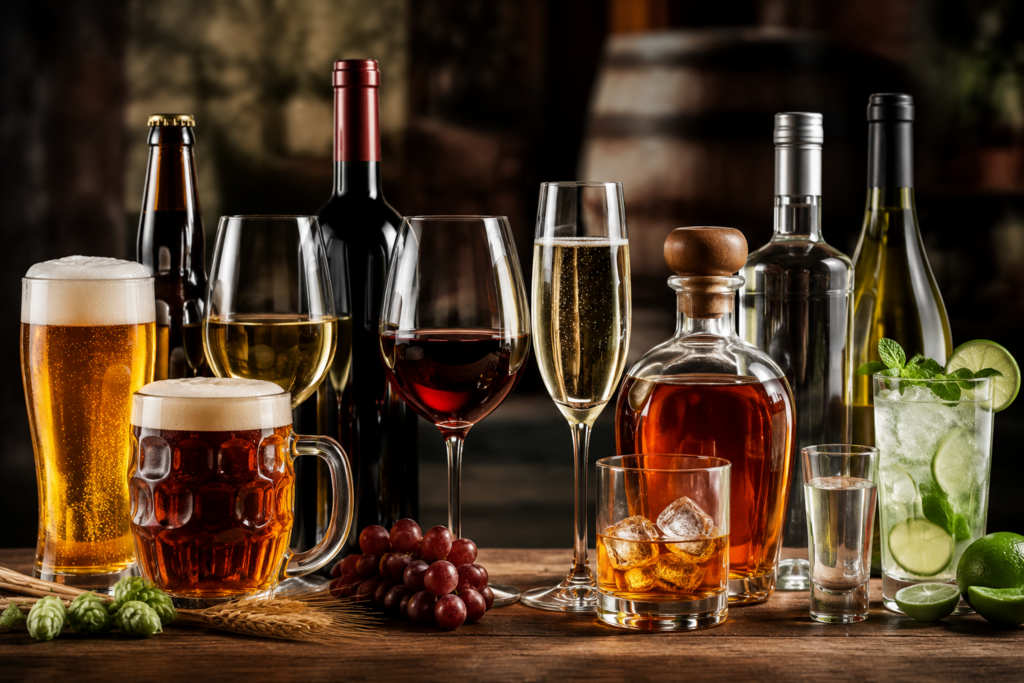
Alcoholic drinks are beverages that contain ethanol, a type of alcohol produced when yeast ferments sugars from grains, fruits, honey, or other natural ingredients. They are broadly divided into fermented beverages, such as beer, wine, cider, and mead, and distilled spirits, including whiskey, vodka, rum, gin, tequila, and brandy. Cocktails, liqueurs, and fortified wines build on these foundations, creating hundreds of beverage styles enjoyed around the world.
Whether you are ordering at a restaurant, stocking a home bar, exploring wine for the first time, or choosing practical serving accessories such as glassware, bottle openers, custom wine openers, and custom wine stoppers, understanding the major categories of alcoholic drinks makes selecting, serving, and preserving the right beverage much easier.
From centuries-old brewing traditions to modern ready-to-drink cocktails, today’s alcoholic beverage market is more diverse than ever. Each category differs in how it is made, how it tastes, its typical alcohol content, and the occasions in which it is commonly enjoyed.
Key Takeaways
- Alcoholic drinks fall into two primary categories: fermented beverages and distilled spirits.
- Beer, wine, cider, and mead are produced through fermentation, while whiskey, vodka, gin, rum, tequila, and other spirits are distilled.
- Cocktails combine spirits with mixers, while liqueurs are sweetened, flavored spirits.
- Alcohol content varies widely, from approximately 3% ABV in some beers to over 60% ABV in certain spirits.
- Understanding ingredients, production methods, and flavor profiles helps you choose the right drink for different occasions.
What Are Alcoholic Drinks?
Alcoholic drinks are beverages containing ethanol, the type of alcohol created when yeast converts natural sugars into alcohol and carbon dioxide during fermentation. Depending on the beverage, those sugars may come from grapes, apples, barley, wheat, rye, corn, rice, honey, sugarcane, agave, or other fruits and plant-based ingredients.
Some beverages stop after fermentation, while others undergo distillation, a process that concentrates alcohol by separating it from water through controlled heating and condensation. This distinction creates the two largest families of alcoholic beverages: fermented drinks and distilled drinks.
Fermented Drinks
Fermented beverages rely entirely on yeast fermentation to produce alcohol. Common examples include beer, wine, sparkling wine, Champagne, cider, mead, and sake. These drinks generally contain between 3% and 15% alcohol by volume, although the exact strength varies by style and production method.
Distilled Drinks
Distilled beverages begin as fermented liquids before being heated to separate and concentrate the alcohol. Common examples include whiskey, vodka, gin, rum, brandy, tequila, and mezcal. Because distillation increases the concentration of ethanol, spirits usually range from 35% to 50% ABV, although some varieties can exceed 60%.
How Alcoholic Drinks Are Classified
Although alcoholic beverages are often grouped by flavor, color, or serving style, they can also be classified according to how they are produced.
By Production Method
- Fermented drinks: Produced solely through fermentation, in which yeast converts sugars into alcohol. Examples include beer, wine, mead, cider, and sake.
- Distilled drinks: Fermented first and then distilled to increase alcohol concentration. Examples include vodka, whiskey, gin, rum, tequila, and brandy.
- Fortified wines: Wines strengthened by adding distilled spirits, usually brandy or a neutral grape spirit. Examples include Port, Sherry, Madeira, Vermouth, and Marsala.
- Mixed drinks: Beverages that combine spirits or other alcoholic ingredients with mixers such as fruit juice, soda, bitters, syrups, tonic water, herbs, or sparkling wine.
Types of Alcoholic Drinks
1. Beer
Beer is one of the world’s oldest and most widely consumed alcoholic beverages. It is brewed from cereal grains, most commonly barley, although wheat, rye, oats, rice, and corn are also used.
During brewing, malted grains are mashed to extract fermentable sugars. The liquid is then boiled with hops, which contribute bitterness, aroma, and flavor, before yeast is added to begin fermentation. Depending on the ingredients and brewing method, beer can range from light, clean, and refreshing to dark, rich, and intensely roasted.
Common Beer Styles
- Lager: Lagers ferment at cooler temperatures using bottom-fermenting yeast. They are generally known for their clean finish, crisp flavor, mild bitterness, and easy-drinking character. Common examples include Pilsner, Helles, Märzen, and Dunkel.
- Ale: Ales use top-fermenting yeast and ferment at warmer temperatures. Compared with lagers, they often have fruitier aromas, a fuller body, and more complex flavors. Popular styles include Pale Ale, Brown Ale, Amber Ale, and Belgian Ale.
- India Pale Ale: India Pale Ale, commonly called IPA, was historically brewed with additional hops to help preserve the beer during long-distance transport. Modern IPAs are known for citrus, pine, tropical fruit, floral, or resinous flavors, along with moderate to intense bitterness.
- Stout: Stouts are dark beers made with roasted malt or roasted barley. They commonly feature flavors of coffee, dark chocolate, toast, caramel, and sometimes smoke. Their body can range from relatively light and dry to thick, sweet, and full-bodied.
- Porter: Porters are dark, malt-forward beers that often resemble stouts but are generally less intensely roasted. Typical flavors include chocolate, caramel, nuts, toast, and mild coffee.
- Wheat Beer: Wheat beers are brewed with a significant proportion of wheat alongside barley. Many styles have a soft texture, lively carbonation, and aromas resembling banana, clove, citrus, or fresh bread.
- Sour Beer: Sour beers are produced using wild yeast, bacteria, or controlled fermentation methods that create noticeable tartness and acidity. Popular examples include Lambic, Berliner Weisse, and Gose.
Typical Beer Alcohol Content
| Beer Style | Typical ABV |
| Light Lager | 3%–5% |
| Pale Ale | 4%–6% |
| IPA | 5%–8% |
| Stout | 4%–8% |
| Imperial Stout | 8%–12% |
2. Wine
Wine is produced by fermenting grapes, although similar beverages can also be made from many other fruits. It has been part of human culture for thousands of years and remains one of the most diverse categories of alcoholic drinks.
Unlike beer, which relies primarily on grains, hops, yeast, and water, wine reflects the grape variety, climate, soil, harvest conditions, fermentation process, aging method, and other winemaking decisions. These factors influence its color, aroma, acidity, sweetness, tannin, body, and flavor.
Common Types of Wine
- Red Wine: Red wine is generally fermented with the grape skins, allowing pigments, tannins, and flavor compounds to pass into the wine. Common varieties include Cabernet Sauvignon, Merlot, Pinot Noir, Syrah, Malbec, and Zinfandel. Depending on the grape and production method, red wines may feature flavors of cherry, blackberry, plum, spice, oak, tobacco, or chocolate.
- White Wine: White wine is usually fermented without prolonged contact with the grape skins. Popular varieties include Chardonnay, Sauvignon Blanc, Riesling, Pinot Grigio, and Chenin Blanc. Flavor profiles range from crisp citrus, green apple, and herbs to ripe peach, tropical fruit, butter, and vanilla.
- Rosé Wine: Rosé receives its pink color from brief contact between the grape juice and red grape skins. Styles range from pale, dry, and refreshing to deeper-colored, fruit-forward, and slightly sweet.
- Sparkling Wine: Sparkling wine contains dissolved carbon dioxide, which creates its characteristic bubbles. Well-known styles include Champagne, Prosecco, Cava, Crémant, and English sparkling wine. Production methods vary, but bottle-fermented sparkling wines, including Champagne, often develop finer bubbles and more complex notes of toast, brioche, and nuts.
Ceremonial openings may involve a champagne saber, which is used to remove the top of the bottle with a controlled motion along the glass seam. Once opened, a dedicated champagne stopper can help maintain pressure and preserve the bubbles when the bottle is not finished immediately. - Dessert Wine: Dessert wines contain noticeable residual sugar and are commonly served in smaller portions. Examples include Sauternes, Tokaji, ice wine, and late-harvest wines. Their flavors may include honey, apricot, dried fruit, citrus peel, caramel, and spice.
- Fortified Wine: Fortified wine is strengthened by adding a distilled grape spirit during or after fermentation. Popular examples include Port, Sherry, Madeira, Marsala, and Vermouth. These wines generally have a higher alcohol content and may be served as aperitifs, dessert wines, or cocktail ingredients.
- Orange Wine: Despite its name, orange wine is not made from oranges. It is produced by fermenting white grapes with their skins, creating a deeper amber or orange color, firmer tannins, and a more textured flavor profile.
- Natural Wine: Natural wine is generally produced with minimal intervention, often using native yeasts, limited additives, and little or no filtration. However, there is no single universal production standard, so styles and quality can vary considerably among winemakers.
Typical Wine Alcohol Content
| Wine Type | Typical ABV |
| Sparkling Wine | 10%–12% |
| White Wine | 11%–14% |
| Rosé Wine | 11%–13% |
| Red Wine | 12%–15% |
| Fortified Wine | 15%–22% |
Proper storage and resealing can help preserve wine after opening. Still wines can be closed with wine stoppers, while sparkling wines require champagne stoppers designed to withstand pressure and retain carbonation. During service, an ice bucket can keep white, rosé, and sparkling wines chilled, while coordinated custom barware can enhance presentation in restaurants, hotels, tasting rooms, and private events.
3. Spirits (Liquor)
Spirits, also called liquor, are distilled alcoholic beverages with a significantly higher alcohol content than beer or wine. Every spirit begins as a fermented liquid made from grains, fruit, sugarcane, agave, or another source of fermentable sugar. The liquid is then distilled to concentrate the alcohol and refine its flavor, aroma, and texture.
Most spirits are bottled between 35% and 50% ABV, or 70 to 100 proof, although some overproof expressions exceed 60% ABV. Depending on the style, spirits may be enjoyed neat, served over ice, or mixed into cocktails.
Common Types of Spirits
- Whiskey: Whiskey is distilled from fermented grain mash and is often aged in wooden barrels, where it develops color, aroma, and complexity. Major styles include Scotch whisky, bourbon, Irish whiskey, rye whiskey, and Japanese whisky. Common flavors include vanilla, caramel, oak, dried fruit, spice, smoke, and toasted grain. Most whiskeys contain between 40% and 50% ABV.
- Vodka: Vodka is known for its clean, neutral flavor and versatility in cocktails. It may be produced from wheat, rye, corn, potatoes, grapes, or other fermentable ingredients. Because it contributes alcohol without strongly overpowering other flavors, vodka is widely used in drinks such as the Moscow Mule, Bloody Mary, Cosmopolitan, and Espresso Martini. Vodka is typically bottled at around 40% ABV.
- Gin: Gin begins as a neutral spirit flavored primarily with juniper berries and other botanicals. Common additions include coriander, citrus peel, angelica root, cardamom, lavender, and rosemary. Major styles include London Dry Gin, Plymouth Gin, Old Tom Gin, and contemporary gin. Popular gin cocktails include the Gin and Tonic, Martini, Negroni, and Tom Collins. Gin generally ranges from 37.5% to 47% ABV.
- Rum: Rum is distilled from sugarcane juice, molasses, or other sugarcane byproducts. Its flavor depends on the raw material, fermentation method, distillation process, aging period, and barrel type. Common styles include white rum, gold rum, dark rum, spiced rum, overproof rum, and aged rum. Typical flavors include caramel, vanilla, tropical fruit, brown sugar, molasses, and baking spices. Rum is used in cocktails such as the Mojito, Daiquiri, Piña Colada, and Mai Tai and usually contains between 37.5% and 50% ABV.
- Tequila: Tequila is an agave spirit produced from Blue Weber agave in legally designated regions of Mexico. Its main aging categories are blanco, reposado, añejo, and extra añejo. Blanco tequila is generally fresh, vegetal, peppery, and citrus-forward, while aged varieties develop richer notes of oak, vanilla, caramel, and spice. Popular tequila cocktails include the Margarita, Paloma, and Tequila Sunrise. Tequila typically ranges from 35% to 40% ABV.
- Mezcal: Mezcal is another Mexican agave spirit produced in approved regions, particularly Oaxaca. Unlike tequila, it may be made from many different agave varieties. Some traditional production methods involve roasting agave hearts in underground pits, which can create smoky flavors. However, mezcal may also display earthy, floral, herbal, fruity, and mineral characteristics. Most mezcal contains between 40% and 50% ABV.
- Brandy: Brandy is distilled from fermented fruit juice, most commonly grapes. Major styles include Cognac, Armagnac, apple brandy, Calvados, and Pisco. Barrel-aged brandies often develop flavors of dried fruit, vanilla, caramel, oak, nuts, and spice. Brandy generally ranges from 35% to 45% ABV.
Other Popular Spirits
Many countries and regions produce distinctive spirits that reflect local ingredients and traditional distillation methods. Baijiu is a powerful Chinese spirit usually made from sorghum or other grains, while soju is a Korean spirit traditionally made from rice or other starches. Shochu is a Japanese distilled beverage that may be produced from barley, sweet potatoes, rice, or buckwheat.
Cachaça is a Brazilian sugarcane spirit best known as the base of the Caipirinha. Aquavit is a Scandinavian spirit commonly flavored with caraway, dill, and other botanicals. Absinthe is a strongly flavored spirit associated with wormwood, anise, and fennel, while Pisco is a grape-based spirit produced in Peru and Chile.
Each of these spirits has its own production standards, cultural traditions, serving customs, and flavor profile.
4. Classic Cocktails
- Old Fashioned: One of the oldest whiskey cocktails, the Old Fashioned combines bourbon or rye whiskey with bitters, sugar, and an orange twist, creating a spirit-forward drink with subtle sweetness and citrus aroma.
- Martini: Traditionally made with gin and dry vermouth, although vodka versions are also popular, the Martini is known for its clean, crisp, and sophisticated flavor profile.
- Margarita: Made with tequila, orange liqueur, and fresh lime juice, the Margarita is one of the world’s most recognizable cocktails and can be served shaken, on the rocks, or frozen.
- Negroni: The Negroni combines equal parts gin, Campari, and sweet vermouth to create a bittersweet cocktail with herbal and citrus notes.
- Manhattan: This classic whiskey cocktail blends rye or bourbon with sweet vermouth and bitters, producing a rich, smooth drink with hints of spice and oak.
- Mojito: A refreshing Cuban cocktail made with rum, mint, lime juice, sugar, and soda water, offering bright citrus flavors balanced by fresh herbs.
- Daiquiri: Far more than a frozen vacation drink, the classic Daiquiri combines rum, lime juice, and simple syrup for a clean, balanced cocktail.
- Whiskey Sour: A combination of whiskey, fresh lemon juice, and sugar, often topped with egg white for a creamy texture and silky finish.
- Mimosa: A simple blend of sparkling wine and orange juice, the Mimosa is a popular brunch cocktail known for its light, refreshing character.
- Bellini: Originating in Italy, the Bellini combines sparkling wine with peach purée for a delicate, fruity cocktail.
Sparkling cocktails are best served well chilled. An ice bucket helps maintain the ideal serving temperature throughout celebrations, while quality glassware enhances aroma, appearance, and presentation.
Liqueurs and Cordials
Although many people confuse liqueurs with spirits, they are not the same. Liqueurs begin with a distilled spirit but are sweetened and flavored using ingredients such as fruits, herbs, spices, coffee, nuts, chocolate, or cream. They generally contain less alcohol than their base spirits.
Popular examples include Amaretto, Baileys Irish Cream, Cointreau, Triple Sec, Grand Marnier, Kahlúa, Chambord, Frangelico, Sambuca, and Jägermeister. Liqueurs are commonly used in cocktails but may also be enjoyed on their own after meals.
Typical ABV: 15%–35%
5. Cider
Hard cider is produced by fermenting apple juice rather than grains or grapes. Depending on the apple varieties and fermentation process, cider may be dry, semi-dry, sweet, still, or sparkling. Pear cider, often called perry, is made from fermented pears.
Modern craft cider producers also experiment with barrel aging, hops, berries, spices, and wild fermentation to create increasingly diverse styles.
Typical ABV: 4%–8%
6. Mead
Often called the world’s oldest alcoholic beverage, mead is made by fermenting honey with water and yeast. Different ingredients create several distinct styles. Traditional mead uses only honey, water, and yeast, while Melomel incorporates fruit, Cyser is made with apples, Metheglin includes herbs or spices, and Braggot blends mead with beer.
Depending on production methods, mead can range from bone dry to richly sweet and from light-bodied to full-bodied.
Typical ABV: 6%–20%
7. Sake
Although sake is commonly referred to as rice wine, it is brewed more like beer because starch must first be converted into fermentable sugar before yeast fermentation begins.
Premium categories include Junmai, Ginjo, Daiginjo, and Nigori, each offering different levels of rice polishing and distinctive flavor characteristics. Depending on the style, sake may be served chilled, at room temperature, or gently warmed.
Typical ABV: 13%–17%
8. Hard Seltzer
Hard seltzers have become one of the fastest-growing alcoholic beverage categories. They are typically produced by fermenting cane sugar or malt before adding carbonated water and natural fruit flavoring.
Many consumers enjoy hard seltzers because they are typically lower in calories, light-bodied, refreshing, and, depending on the production method, often gluten-free. Popular flavors include lime, mango, black cherry, watermelon, and grapefruit.
Typical ABV: 4%–6%
9. Ready-to-Drink (RTD) Cocktails
Ready-to-drink cocktails combine convenience with consistent flavor. Available in cans or bottles, RTDs replicate popular mixed drinks without requiring additional ingredients or bar equipment.
Popular varieties include canned Margaritas, Mojitos, Gin & Tonics, Whiskey and Cola, Vodka Soda, and Espresso Martinis. As the category continues to grow, premium RTDs increasingly use real spirits instead of malt-based alternatives, delivering a cocktail experience with minimal preparation.
Popular Alcoholic Drinks Around the World
Alcohol traditions vary across cultures, reflecting local ingredients, history, and climate. Germany is best known for beer, particularly lagers and wheat beers, while France is internationally recognized for wine, Champagne, Cognac, and Armagnac. Italy is famous for wine, Prosecco, Vermouth, and Amaro, Scotland for Scotch whisky, Ireland for Irish whiskey and stout, Mexico for tequila and mezcal, Japan for sake, shochu, and Japanese whisky, South Korea for soju and makgeolli, China for baijiu, and Brazil for cachaça, the key ingredient in the Caipirinha. Exploring regional drinks is one of the best ways to experience a country’s culinary heritage.
How to Store Alcoholic Drinks
Proper storage helps preserve flavor, aroma, and overall quality.
- Beer: Store beer upright in a cool, dark place. Most styles are intended to be consumed fresh rather than aged.
- Wine: Store bottles on their side if sealed with natural cork to help keep the cork moist. After opening, reseal the bottle with a wine stopper and refrigerate when appropriate.
- Sparkling Wine: Once opened, use a champagne stopper to retain carbonation and refrigerate the bottle until your next serving.
- Spirits: Keep bottles tightly sealed and away from direct sunlight. Unlike wine, most distilled spirits do not continue aging after bottling.
For parties and celebrations, an ice bucket helps maintain ideal serving temperatures for sparkling wine, white wine, rosé, and many cocktails. Bartenders and hosts often pair these beverages with quality custom barware for both presentation and functionality.
Choosing the Right Glassware
The shape of a glass can influence aroma, temperature, and the overall drinking experience. Common choices include pint glasses for beer, stemmed wine glasses for red and white wine, Champagne flutes or tulip glasses for sparkling wine, rocks glasses for whiskey, Martini glasses, highball glasses, Collins glasses, coupe glasses, and shot glasses.
While the beverage itself matters most, using the appropriate glassware can enhance aroma, improve presentation, and create a more enjoyable drinking experience.
Understanding the Different Types of Alcoholic Drinks
Alcoholic beverages encompass an extraordinary range of styles, ingredients, and traditions. From crisp lagers and elegant wines to aged whiskeys, botanical gins, refreshing ciders, and creative cocktails, each category reflects unique production methods and cultural heritage.
Understanding how alcoholic drinks are made, their typical alcohol content, and their flavor profiles makes it easier to choose the right beverage for any occasion. Whether you’re exploring craft beer, building a wine collection, discovering premium spirits, or learning to mix classic cocktails, understanding these categories provides a solid foundation for appreciating the diversity of the world’s alcoholic beverages.
The experience extends beyond the beverage itself. Proper storage using wine stoppers or champagne stoppers helps preserve quality after opening, while serving wine or cocktails in the appropriate glassware at the correct temperature enhances aroma, flavor, and presentation. For entertaining or hospitality settings, accessories such as ice buckets, custom wine openers, champagne sabers, and custom barware can also contribute to a more polished serving experience.
Tags: Types of Alcoholic Drinks